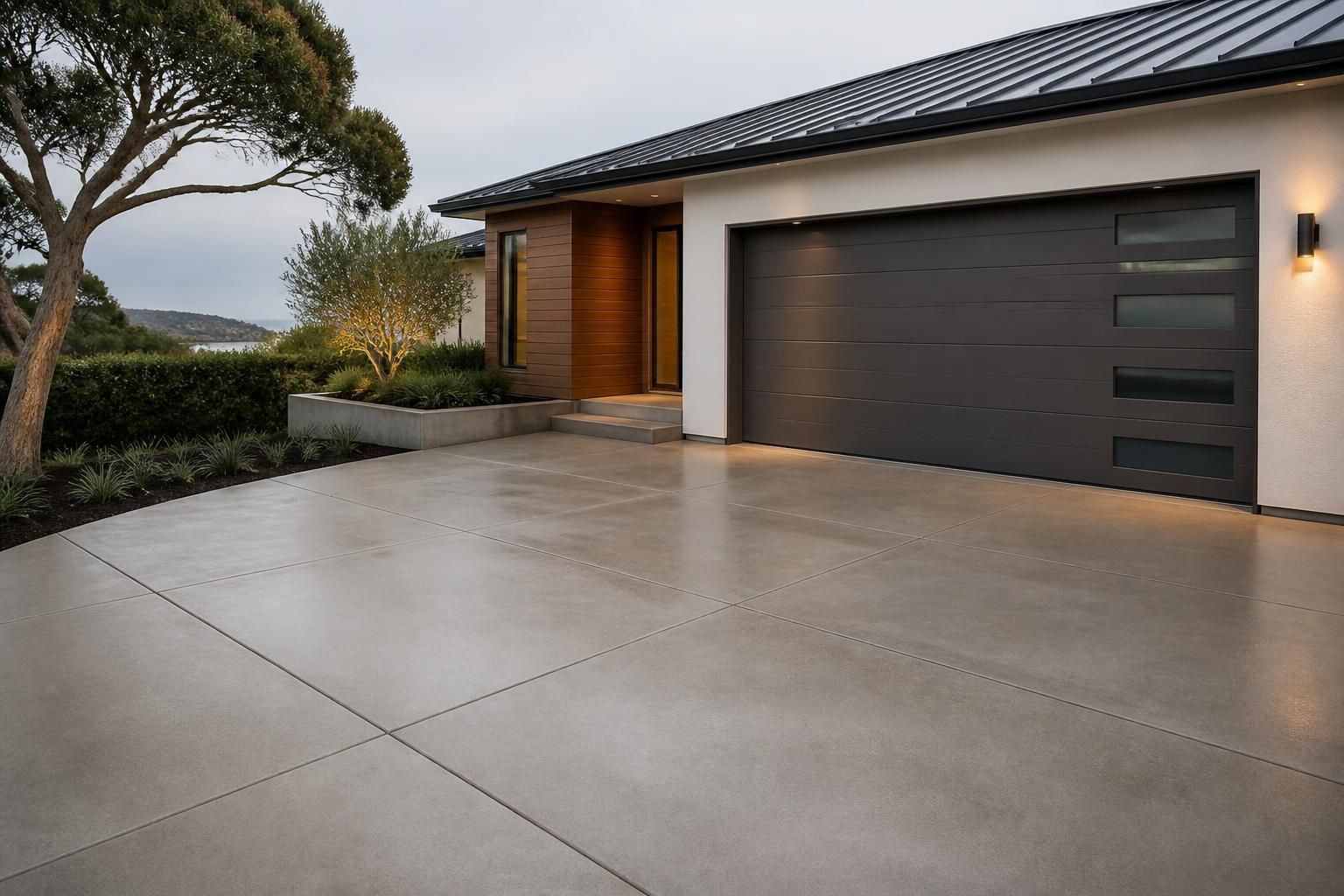
Reliable Concrete and Masonry Craftsmanship for Honolulu and Oahu
What’s Covered on This Page
- Patio or Lanai: Matching the Concrete Addition to How You’ll Use It
- When Repair or Resurfacing Makes More Sense Than a Full Rebuild
- Permits and Drainage Planning Before Breaking Ground in Honolulu
- From Site Prep to Finished Pour: What Happens During Construction
- Curing Time and Long-Term Care in Hawaii’s Climate
- How soon can you come out to look at my patio or lanai project?
- What happens when your crew shows up to start the job?
- Why do lanai slabs near Waikiki and Kahala wear out faster?
- What’s the real difference between a patio and a lanai?
- How do I know if my lanai needs a full rebuild or just repair?
- Do I need a permit for a new patio or lanai in Honolulu?
Patio or Lanai: Matching the Concrete Addition to How You’ll Use It
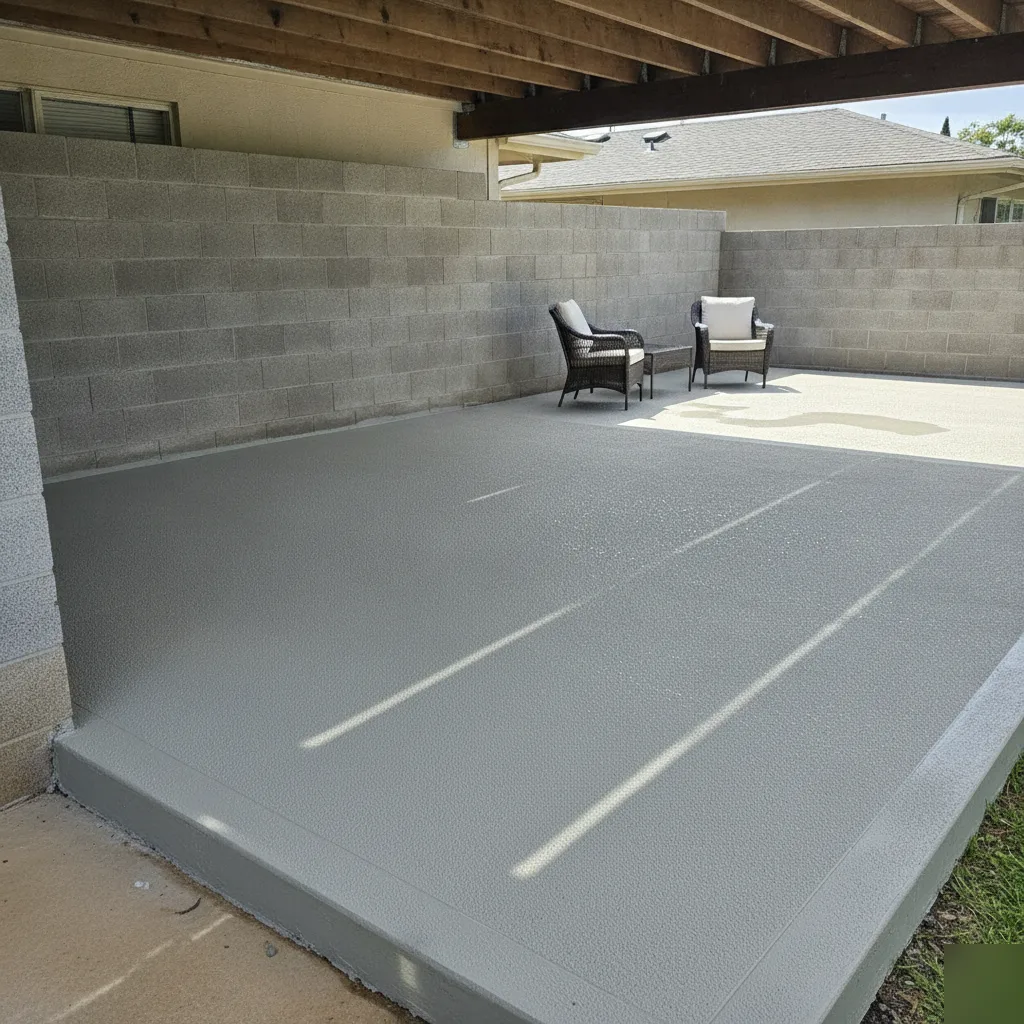
Which one do you need? It depends on what you are picturing yourself doing out there. A patio is a standalone slab, often set off the back of the house, built for grilling, or sitting outside in the evening. Maybe a table and chairs under string lights. A lanai ties into the roof structure or runs under an overhang. It gives you shade and rain cover most of the day.
We get this question constantly. Someone wants an outdoor living space but hasn’t thought past that idea. Here’s how we sort it out with folks.
- Open patio: if you want full sun for morning coffee or evening barbecues and don’t mind moving furniture in when trade wind showers roll through
- Covered lanai: makes sense if you want a spot to sit outside every day, rain or shine, without checking the forecast first
- Pool deck areas: usually paired with a lanai section nearby for shade, since the deck itself needs full sun exposure to dry between swims
- Small side-yard slabs: often work better as simple patios since there’s rarely enough structure overhead to tie a lanai roofline into
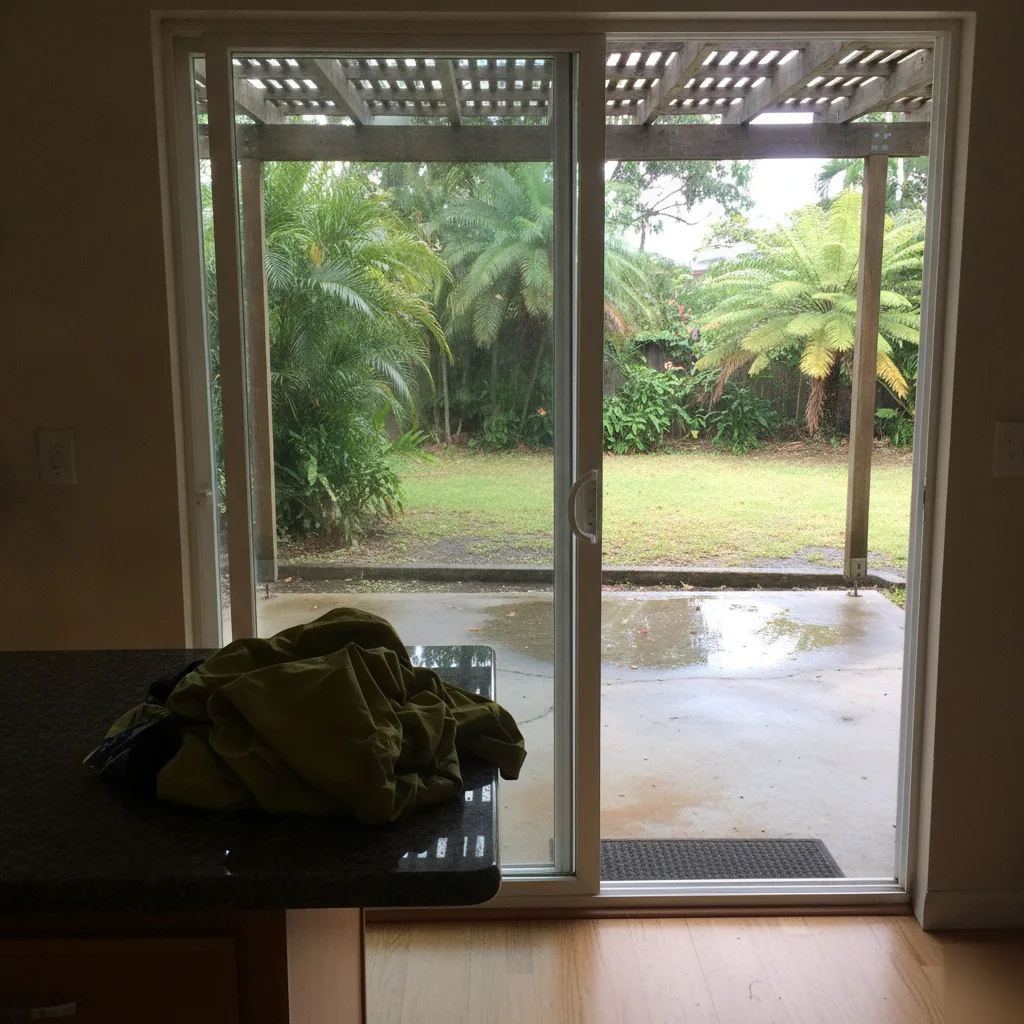
Honolulu’s weather makes this decision more than cosmetic. Afternoon showers move through fast. A bare patio slab can sit wet for an hour after everyone else’s yard has dried out. That’s not a defect; it’s just what open concrete does in this climate. A lanai roof changes that math completely.
Rooflines matter too. If you’re tying a lanai into an existing structure, the framing and drainage need to work with what’s already there.
Either way, the slab underneath has to handle Oahu’s mix of heat, humidity, and heavy rain runoff. That part doesn’t change based on which style you pick.
When Repair or Resurfacing Makes More Sense Than a Full Rebuild
Not every rough lanai needs to come out. That surprises people. If the slab is still flat, still draining the right direction, and the cracks are surface deep, resurfacing or a targeted repair usually gets you a good result for less disruption than a full rebuild.
How do you tell the difference? Look at the crack. A hairline crack that doesn’t move when you rock a chair leg on it is usually cosmetic. A crack you can slide a dime into, or one where one side sits higher than the other, points to a base problem underneath. That’s a different conversation.
- Surface pitting or flaking (spalling) without any slope or settling issues
- Hairline cracking that hasn’t widened or shifted over a season or two
- A slab that’s structurally sound but just looks tired, faded, or stained
- Small areas of damage near a drain, post base, or old expansion joint
Salt air is the thing we deal with constantly closer to the water. In spots like Waikiki and Kahala, lanai slabs take a beating from moisture and salt exposure. They start spalling years before an inland slab would. That’s often a resurfacing job, not a demo job.
Here’s the honest version – we see this every week. A homeowner calls ready to book a full rebuild because the patio looks bad, and it turns out the concrete underneath is fine. That’s a smaller job, and we’ll tell you that up front. Our team, experienced in concrete patio and lanai construction in Honolulu, walks the slab, checks the base, and gives you the real answer before recommending anything bigger than it needs to be. Catching the problem early is what keeps it a repair instead of a rebuild.
Permits and Drainage Planning Before Breaking Ground in Honolulu
Before we pour a single yard of concrete, we look at where the water goes. Honolulu gets heavy, fast rain, especially during the winter months. A patio or lanai slab poured flat, or worse, sloped toward your house, will send water right back at your foundation. We grade every slab away from the structure. Simple thing. Skip it and you’ll be dealing with standing water or a wet baseboard every time it rains.
Permits depend on the scope of the work. A small lanai extension attached to an existing structure may fall under different rules than a large standalone patio slab. Some projects tie into setback requirements or affect drainage easements between properties. This is especially true on lots in older, tighter subdivisions around Honolulu where houses sit close together. We check this before we schedule anything, not after.
Here’s what we’re looking at during a site visit:
- How close the new slab sits to property lines and existing structures
- Where roof runoff and yard water naturally flow across the lot
- Soil condition, since some areas have expansive or poorly draining clay
- Whether the project needs a permit based on size and attachment to the home
- Existing slabs or pavers that might need removal first
Some homeowners want to skip permits on a small job to save time. We get it; nobody likes waiting on paperwork. But an unpermitted slab can turn into a real headache if you ever sell the house or need an inspection down the road. A slab poured without drainage in mind rarely holds up, no matter how well the concrete itself is finished. Planning this part right the first time saves you from cutting into a new lanai later just to fix water pooling underneath it.
Thinking about Concrete patio and lanai construction? Let’s talk.
Call now for a free estimate. Oahu Masonry & Concrete Contractors is ready to help.
From Site Prep to Finished Pour: What Happens During Construction
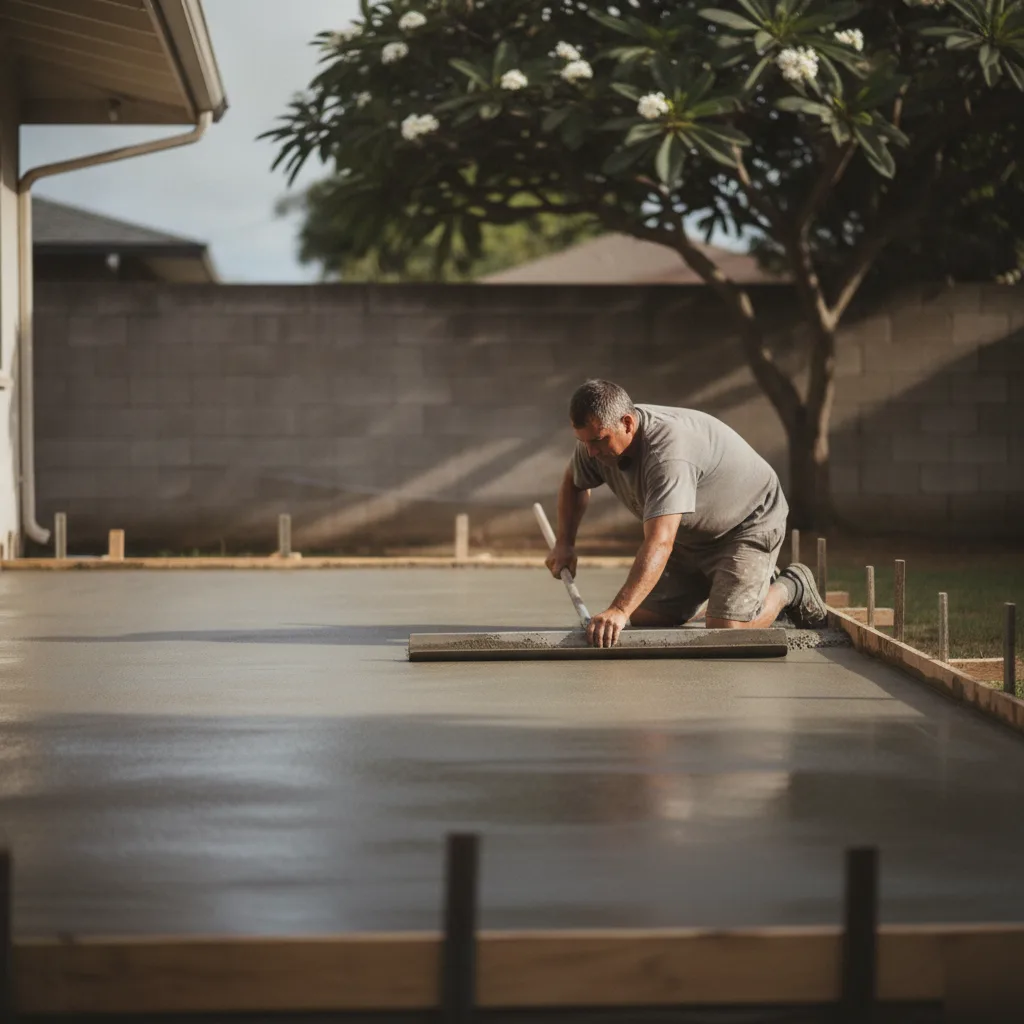
Most of the work happens before the truck even shows up. We’ve poured patios where the homeowner was surprised we spent two days on prep and one day pouring. That’s normal. Skip the prep and the pour looks fine for a season, then it doesn’t.
- Layout and grading. We mark the patio or lanai footprint and set the slope, usually a quarter inch per foot away from the house, so rain runs off instead of pooling near the foundation.
- Excavation and base. Remove the topsoil and old material down to solid ground. Honolulu’s volcanic soil drains differently block to block, so we adjust the base depth based on what we find.
- Compact the base. A loose base is the reason patios crack or sink later. We compact it in layers, not all at once.
- Forms and reinforcement. We set the wood forms to the exact shape, then place rebar or wire mesh depending on the slab’s size and use.
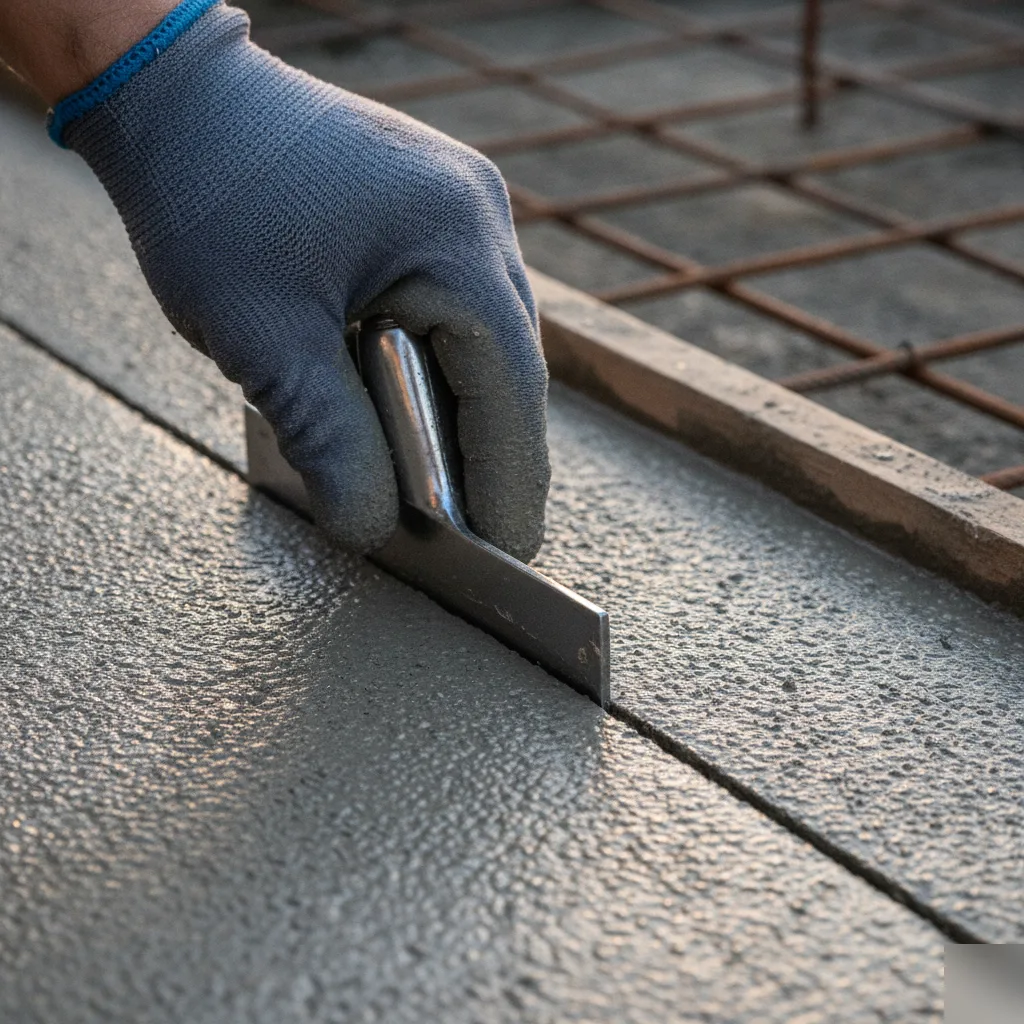
- Control joints. These get cut or tooled at set intervals before the concrete fully sets, giving cracks a planned path instead of a random one.
- Pour and finish. The crew pours, screeds, floats, and finishes the surface-broom, trowel, or a decorative texture-all in the same work session.
- Cure time. We keep the slab protected while it gains strength, which matters more here than people expect.
Rain is the wildcard. Oahu’s weather can turn fast, so we watch the forecast closely on pour day, not just the week before. A surprise shower on fresh concrete can wreck the finish, so timing matters as much as skill.
This is also where lanai covers or roof lines get factored in. Posts and drainage need to be planned into the slab, not added after.
Watch Our Video
See How We Handle Concrete patio and lanai construction in
Oahu Masonry & Concrete Contractors
Curing Time and Long-Term Care in Hawaii’s Climate
Concrete doesn’t dry, it cures. That’s a chemical reaction, not evaporation. Your new patio or lanai will feel solid enough to walk on within a day or two. It needs about seven days of proper moisture to build real strength, and closer to 28 days before it’s at full strength. Honolulu’s heat works against you here. Warm air pulls moisture out of the surface fast. If the top dries before the concrete underneath finishes curing, you get a weaker, more brittle slab that’s prone to surface cracking down the road.
We keep fresh pours covered or damp during that first week, especially on projects without afternoon shade. Salt air near Waikiki and other coastal parts of Honolulu adds another wrinkle. It can speed up surface wear on concrete and masonry over time, so sealing matters more here than it would inland.
- Reseal your patio or lanai every couple of years, more often if it’s close to the shoreline
- Keep planters and drainage clear so water doesn’t pool and sit against the slab
- Rinse off salt spray and sunscreen residue regularly; both can stain and etch the surface
- Check control joints yearly. Hairline separation is normal; wide cracking usually isn’t
- Watch for spalling near pool decks; that flaking surface is often the first sign trapped moisture is doing damage
None of this is complicated; it just takes a little attention twice a year.
Frequently Asked Questions
Common questions about Concrete patio and lanai construction
How soon can you come out to look at my patio or lanai project?
We schedule a site visit before giving you any real plan for your project. During that visit, we check drainage, soil, property lines, and whether your slab is a repair job or needs a full rebuild. This matters in Honolulu because rain patterns and lot size change what’s possible. Booking early also gives us time to check permit needs before pouring season gets busy, especially heading into the wetter winter months.
What happens when your crew shows up to start the job?
Most of the work happens before the truck even pours anything. Our crew spends time laying out the footprint, checking the slope, and prepping the base so water runs away from your house instead of pooling near it. Homeowners are often surprised we spend a day or two on prep before the actual pour. Skipping that step is what causes problems later, even if the slab looks fine the first season.
Why do lanai slabs near Waikiki and Kahala wear out faster?
Salt air speeds up spalling and pitting on lanai slabs close to the water. Homes in Waikiki and Kahala see this years before an inland slab would show the same wear. That doesn’t always mean a rebuild. If the slab is still flat and draining correctly, resurfacing usually fixes the surface damage without tearing everything out. We check the base first before recommending anything bigger.
What’s the real difference between a patio and a lanai?
A patio is an open slab exposed to the sky, while a lanai ties into your roofline for shade and rain cover. Your choice depends on how you’ll use the space. If you want full sun for morning coffee, an open patio works fine. If you want a spot to sit outside every day without checking the weather first, a covered lanai handles Honolulu’s fast-moving afternoon showers much better.
How do I know if my lanai needs a full rebuild or just repair?
Check the cracks first. A hairline crack that doesn’t shift when you rock a chair leg on it is usually cosmetic and can be resurfaced. A crack you can slide a dime into, or one side sitting higher than the other, points to a base problem that needs a bigger fix. We walk the slab and check the base before recommending anything more than the job needs.
Do I need a permit for a new patio or lanai in Honolulu?
It depends on the size of the project and whether it attaches to your home. A small lanai extension may fall under different rules than a large standalone patio slab, especially on tighter lots common around older Honolulu subdivisions. We check setback requirements and drainage easements during the site visit, before scheduling any work, so there are no surprises once the project is underway.
Ready to Get Started?
Call +1-808-468-3880 now for a free estimate.