Reliable Concrete and Masonry Craftsmanship for Honolulu and Oahu
What’s Covered on This Page
- Signs Your Honolulu Driveway Needs Full Replacement
- Repair or Replace: Know Before You Call
- How Concrete Driveway Pricing Works
- The Replacement Process From Demo to Final Cure
- Protecting New Concrete From Heat, Salt Air, and Roots
- How do I know if my driveway needs full replacement instead of a repair?
- Why do driveways in older Honolulu neighborhoods crack more than newer ones?
- How long does concrete driveway replacement take from start to finish?
- When can I drive on my new driveway after it’s poured?
- What should I ask a contractor before getting a driveway quote?
- Does rainy season affect when I can schedule a driveway replacement?
Signs Your Honolulu Driveway Needs Full Replacement
Not every crack means you need a new driveway. A lot of folks call us worried about a single hairline crack. That’s often nothing. But there’s a difference between cosmetic wear and a slab that’s failing underneath. Once the base starts moving, patching just hides the problem for a year or two.
- Cracks wider than a quarter inch, especially ones that keep coming back after patching
- Sections of slab that rock or flex when your car drives over them
- Large chunks of concrete pulling away or spalling near the surface
- Water pooling in the same spots every time it rains
- Multiple slabs settling at different heights, creating trip hazards near the garage or entry
We see this every week, especially in older neighborhoods where homes sit on fill soil that shifts after heavy rain. A driveway in Kaimuki or Palolo built decades ago on coral or volcanic fill can heave and settle in ways a newer slab on compacted base won’t. If your driveway has three or more of these issues showing up together, patching is just delaying the inevitable.
Repair or Replace: Know Before You Call
Not every cracked driveway needs to come out. That surprises people. We show up expecting to write a replacement quote and end up telling the homeowner they can wait a year or two, or that a patch will hold just fine.
Hairline cracks under an eighth of an inch, minor surface scaling, or a small chip near an edge – those are repair jobs, not replacement jobs. If your slab is mostly flat, drains water the way it should, and the cracking hasn’t spread past a season or two, patching makes more sense than tearing it out.
- Cracks wider than a quarter inch or ones that keep growing year over year
- Sections that have sunk, tilted, or shifted, often from Honolulu’s expansive clay soil settling unevenly
- Spalling that’s flaking off in large chunks rather than just surface pitting
- Multiple cracks running in a grid pattern, which usually points to a failed base, not a surface problem
- A slab that’s pooling water in the same spot after every rain
If you’re seeing more than one of those at once, patching is just delaying the real fix. We’ve watched homeowners spend money on repair after repair over a couple years, then still end up replacing the whole driveway anyway, this time with the added cost of removing failed patch work first.
Before you call anyone, walk your driveway and look close. Snap a photo of the worst crack next to a coin for scale; that helps a contractor give you a straightforward answer over the phone. Our team has handled concrete driveway replacement in Honolulu long enough to know which jobs are quick fixes and which ones aren’t.
How Concrete Driveway Pricing Works
Every driveway job gets priced by the same handful of factors, not a flat rate. Size matters, sure. But thickness, base condition, and what’s under that old slab matter more. A driveway on packed coral fill behaves different than one sitting on soft fill dirt near a drainage swale. We check the base before we ever talk numbers.
Removal is often the biggest wildcard. Pulling out a cracked slab with buried utility lines or an old drain pipe takes longer than a clean rip-out. Access matters too. Can our equipment get to the site, or does everything need to move by hand through a narrow side yard? That changes labor hours fast.
- Slab thickness and reinforcement; standard driveways need proper steel or wire mesh for vehicle weight
- Base prep; compacted fill handles Oahu’s rain cycles better than a shortcut base
- Slope and drainage grading, especially where runoff needs to move away from the garage
- Finish type; a broom finish costs less labor than stamped or decorative work
- Site access and old concrete disposal; tight lots take more time to clear
Before you hire anyone, ask what’s included in the quote. Does it cover removal and haul-away? Base rock and compaction? A written scope keeps everyone honest once the jackhammer starts. We build every estimate around the actual scope, not a guess.
Weather plays into scheduling more than people expect; curing time needs dry stretches, and that shifts timelines during wetter months.
Ready when you are – get in touch today.
Call now for a free estimate. Oahu Masonry & Concrete Contractors is ready to help.
The Replacement Process From Demo to Final Cure
What does the job look like once we start? Concrete driveway replacement isn’t just pour and go. We tear out the old slab, check what’s underneath, and rebuild the base before any new concrete touches the ground. Skip that base work and you’re just pouring a new crack waiting to happen.
- Demo and removal – we break up and haul off the old slab, plus any curbing tied into it
- Grading and base prep – the soil gets checked and compacted, low spots corrected
- Form setup – wood or metal forms mark the exact shape and slope for drainage
- Rebar or mesh placement – reinforcement goes in before a drop of concrete pours
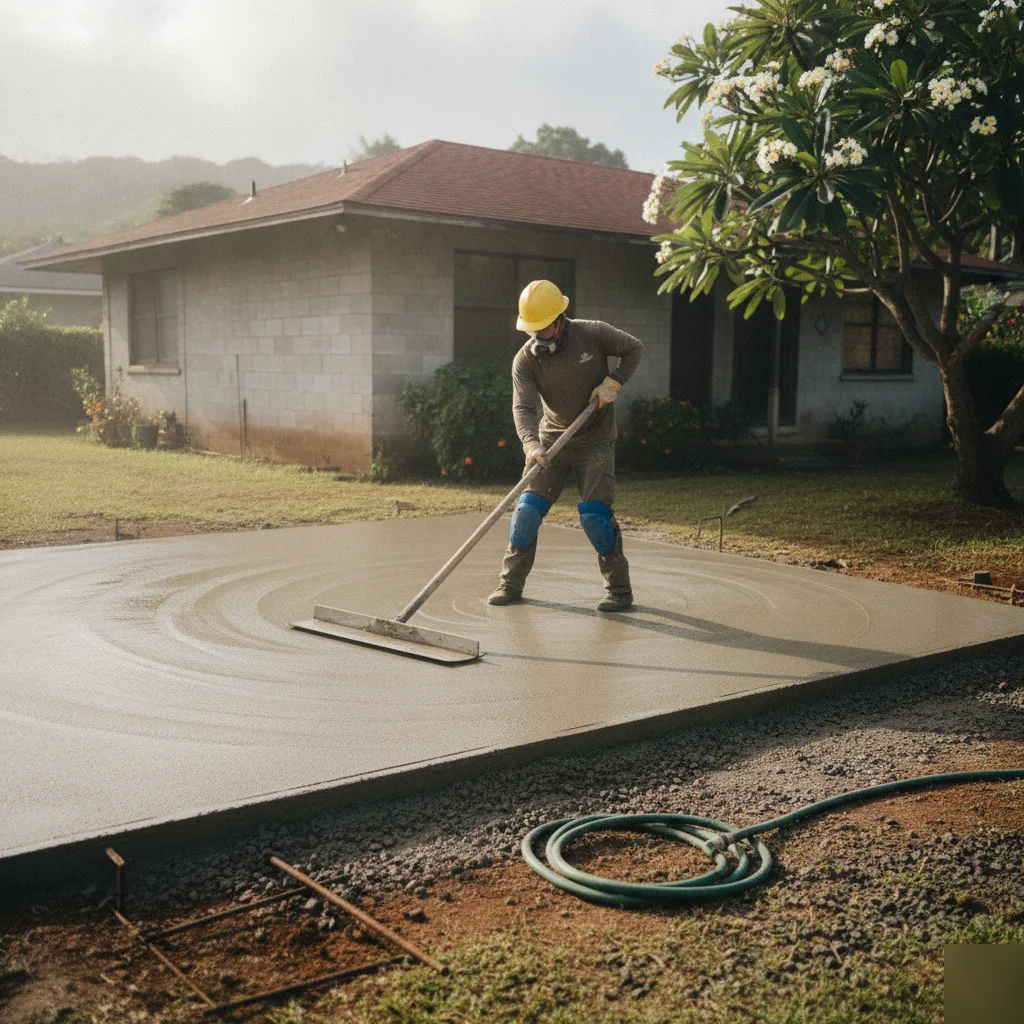
- The pour – concrete goes in, gets screeded level, then floated smooth
- Finishing and joints – control joints get cut to manage cracking as the slab cures
- Curing – the slab sits and hardens before it’s ready for foot or vehicle traffic
That last step trips people up every time. Concrete gains most of its strength in the first week, but it keeps curing for weeks after that. Honolulu’s heat and humidity speed up surface curing. We adjust our timing and water the slab if needed to keep it from drying too fast and cracking. Rush that step and you’ll see hairline cracks show up within a year.
We’ve done this enough times to know exactly where problems hide, usually right at the base.
Protecting New Concrete From Heat, Salt Air, and Roots
New concrete needs a few years to fully cure, and Honolulu’s climate works against it the whole time. Strong sun beats down on exposed slabs almost every day here. That heat pulls moisture out fast, and uneven drying is one of the top causes of surface cracking we see on driveways less than five years old.
Salt air is the other big one. If your home sits anywhere near the coast, salt-laden moisture works its way into the concrete surface over time. It speeds up spalling, that flaking, pitting look on older slabs. We treat this differently for coastal properties than we do for homes further inland.
- Curing time matters more here than in drier climates; rushing this step shows up as cracking within a year or two
- Sealing the surface after cure helps block salt air and UV exposure from breaking down the top layer
- Root barriers matter near mature trees; many older Honolulu lots have monkeypod or banyan trees whose roots will lift a slab planted too close
- Proper base drainage keeps water from pooling under the slab during heavy rain, which weakens concrete from below
Root damage traces back to a driveway poured too close to an old tree without a root barrier. We plan around that upfront. Skip that step, and you’re often looking at another replacement sooner than you’d like.
Frequently Asked Questions
Common questions about Concrete driveway replacement
How do I know if my driveway needs full replacement instead of a repair?
You need full replacement when cracks are wider than a quarter inch, or when sections rock under your car’s weight. One hairline crack usually isn’t a problem, but if you see two or three issues together, like spalling chunks and water pooling in the same spot, the base underneath has likely failed. At that point, patching only buys you a year or two before you’re paying for removal and replacement anyway.
Why do driveways in older Honolulu neighborhoods crack more than newer ones?
Homes in areas like Kaimuki and Palolo often sit on coral or volcanic fill that shifts after heavy rain. Older driveways built on this fill can heave and settle unevenly, creating cracks and trip hazards that newer slabs on compacted base don’t usually get. If your home is decades old and sits on this type of fill, your driveway is more likely to need a full rebuild rather than a surface patch.
How long does concrete driveway replacement take from start to finish?
Most driveway replacements run through seven steps: demo, grading, forms, rebar, the pour, finishing, and curing. Curing takes the longest, since concrete gains most of its strength in the first week but keeps hardening for weeks after. Honolulu’s heat and humidity speed up surface curing, so we water the slab when needed to keep it from drying too fast and cracking.
When can I drive on my new driveway after it’s poured?
You should wait until we tell you the slab has cured enough for vehicle weight, usually after the first week of strength gain. Rushing this step is the most common reason hairline cracks show up within a year. Because Honolulu’s climate speeds up surface drying, we adjust watering and timing so the concrete cures evenly all the way through, not just on top.
What should I ask a contractor before getting a driveway quote?
Ask what’s included in the quote, especially removal, haul-away, and base rock and compaction. A written scope keeps everyone honest once demo starts, since removal is often the biggest wildcard in a job. Buried utility lines or an old drain pipe under your slab can add time, and tight side-yard access can slow things down too, so ask about site access as well.
Does rainy season affect when I can schedule a driveway replacement?
Yes, wetter months can shift your timeline because curing needs dry stretches to set up properly. We plan pours around Oahu’s rain cycles and build in extra drying time when needed. If you’re seeing standing water on your current driveway after every rain, that’s worth mentioning when you call, since drainage grading is part of getting the new slab to perform better.
Ready to Get Started?
Call +1-808-468-3880 now for a free estimate.